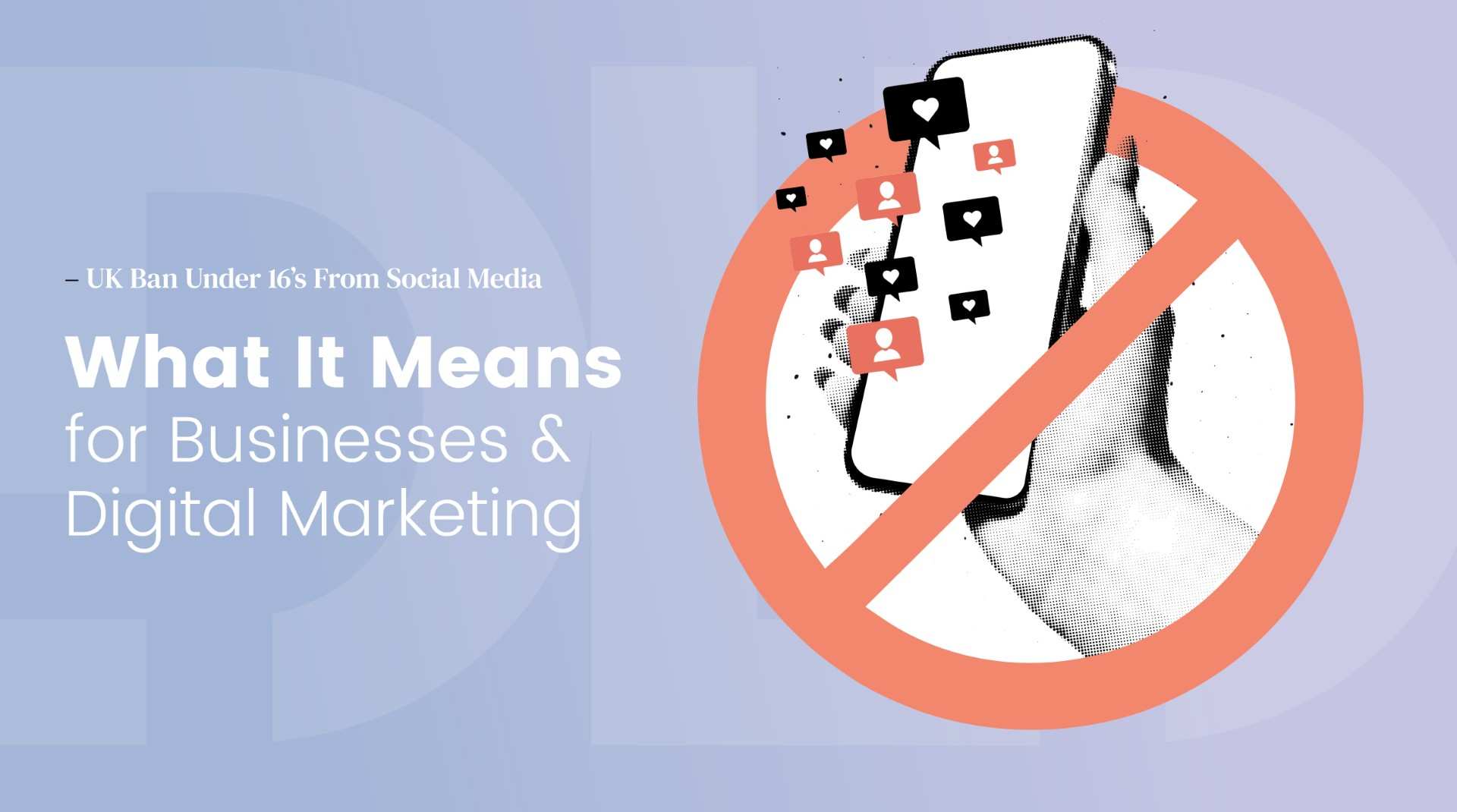
What It Means for Businesses and Digital Marketing.
The UK government is moving ahead with plans to restrict social media access for under 16s, something that once seemed unrealistic. But beyond the headlines around screen time, online safety and parenting, there is another conversation happening beneath the surface.
What happens to businesses that rely on social media marketing?
The impact could be significant for brands targeting younger audiences, especially those built around TikTok trends, Instagram Reels, and influencer culture. But even businesses that do not directly market to teenagers could feel the effects through changes to algorithms, audience behaviour, and advertising regulations.
This is no longer just a story about “kids online.” It is also a business story.
What Is The UK Social Media Ban?
The UK government is introducing new online safety measures that will restrict social media access for users under the age of 16.
Alongside the existing Online Safety Act, the changes include:
- A social media ban for under 16s
- Stronger age verification technology
- Restrictions on harmful and addictive platform features
- Tighter rules around messaging apps and livestreaming
- Greater responsibility for social media platforms to protect younger users
The changes follow growing concerns around harmful content, online exploitation, and the impact social media may have on children’s mental health.
Why Should Businesses Pay attention
At first glance, many brands may think this will not affect them.
“We don’t market to children.”
But social media platforms no longer work in neat demographic categories.
Younger audiences heavily influence trends, engagement, viral content, and meme culture. Remove a large portion of those users and the platforms themselves begin to change.
That could impact:
- Reach and engagement
- Algorithm performance
- Ad targeting
- Influencer marketing
- Content trends
- Platform popularity
And if your business relies heavily on platforms like TikTok or Instagram for visibility, that matters.
Could TikTok and Instagram Marketing Change?
Most likely.
Younger audiences drive trends, engagement, and viral culture across social media. With under 16s restricted from accessing these platforms, social networks may begin shifting towards older audiences and more commercially focused content.
We could see social media platforms becoming more like hybrid search engines and ecommerce platforms rather than pure entertainment apps.
In many ways, this is already happening.
TikTok is increasingly competing with Google for search traffic, while Instagram continues pushing shopping features, subscriptions, and AI driven recommendations.
The Rise of Search Driven Social Media
One of the biggest shifts happening online is how people search for information.
Many younger users already use TikTok instead of Google to discover:
- Restaurants
- Fashion brands
- Products
- Travel destinations
- Reviews
- Tutorials
As social media audiences change, search behaviour could shift again, forcing businesses to rethink how they optimise content online.
That means brands may need to invest more heavily in:
- SEO
- AI search optimisation
- Long form content
- Educational content
- YouTube
Owned media such as blogs and email marketing
Businesses that moved away from SEO in favour of social media trends may suddenly find themselves playing catch up.
Influencer Marketing Could Become More Expensive
As audiences change, attention becomes more valuable.
Brands may need to spend more money to achieve the same reach, while tighter regulations and age verification rules could make campaigns aimed at younger audiences far more difficult to manage.
At the same time, creators may begin shifting towards other platforms entirely.
A ban could accelerate growth on:
- YouTube
- Discord communities
- Private membership platforms
- Messaging apps
- Emerging platforms
That fragmentation could make digital marketing far more complicated.
The Data Problem Nobody Is Talking About
One of the biggest challenges surrounding the UK social media ban is enforcement.
Age verification technology will play a major role in how these changes are implemented, and this could affect how platforms collect and use user data.
Businesses should pay attention because stricter age checks could impact:
- Ad personalisation
- Audience tracking
- User data collection
- Conversion reporting
- Retargeting campaigns
In other words, marketers may lose even more visibility into audience behaviour.
After years of privacy updates and cookie restrictions, this could become another major challenge for precision targeting.
Will Businesses Need To Change Their Marketing Strategy?
Probably.
The brands that survive major digital shifts are usually the ones that adapt early.
If stronger regulations arrive, businesses should start thinking about:
Diversifying Traffic Sources
Relying entirely on social media has always been risky.
Brands should strengthen:
- Organic SEO
- Email marketing
- Community building
- YouTube content
- Google Business visibility
- First party data collection
Creating Search Friendly Content
Google searches, AI generated summaries, and LLM based discovery are becoming increasingly important.
That means businesses should focus on creating content that answers real questions clearly and conversationally.
Blogs, FAQs, guides, and educational content could become even more valuable over the next few years.
Building Brand Recognition Outside Algorithms
The businesses most vulnerable to social media disruption are the ones entirely dependent on platform reach.
Strong brands survive because people search for them directly.
That is why branding matters more than ever.
What Happens Next?
The UK social media ban marks a major shift in how platforms operate and how users access online content.
There will continue to be discussions around enforcement, technology, and how effectively these changes can be implemented.
What does seem clear, however, is that regulation is increasing.
And for businesses, that means the digital marketing landscape could look very different over the next few years.
Final Thoughts
The UK social media ban for under 16s represents a major change for social platforms, users, and businesses.
Platforms are facing growing pressure around safety, privacy, data usage, and mental health concerns. Governments are becoming more aggressive with regulation, while users are changing how they discover content online.
For businesses, this is a reminder not to build an entire marketing strategy on borrowed platforms.
Social media will still matter. But businesses investing in SEO, valuable content, email marketing, and strong branding will be in a far better position as the digital landscape changes.
Because when social media rules change, the brands with visibility beyond the algorithm are the ones most likely to survive.
Want to Know More?
If you would like to discuss how these changes could impact your business, feel free to get in touch with us. We are always happy to help.